Yacht Automation Systems
Design, installation, programming, integration, refit and commissioning of automation systems on new and existing yachts. We bring the vessel’s different systems together on a single, reliable control platform.
We bring alarm monitoring (AMS), power management, tank and bilge control, lighting, HVAC and engine data together in one system built on marine-certified PLCs and touch operator panels. We write the software ourselves, build the panels in our workshop and commission them on board.
The yacht automation systems we build are designed, tested and documented so that they can obtain approval from classification societies such as RINA, ABS and DNV.
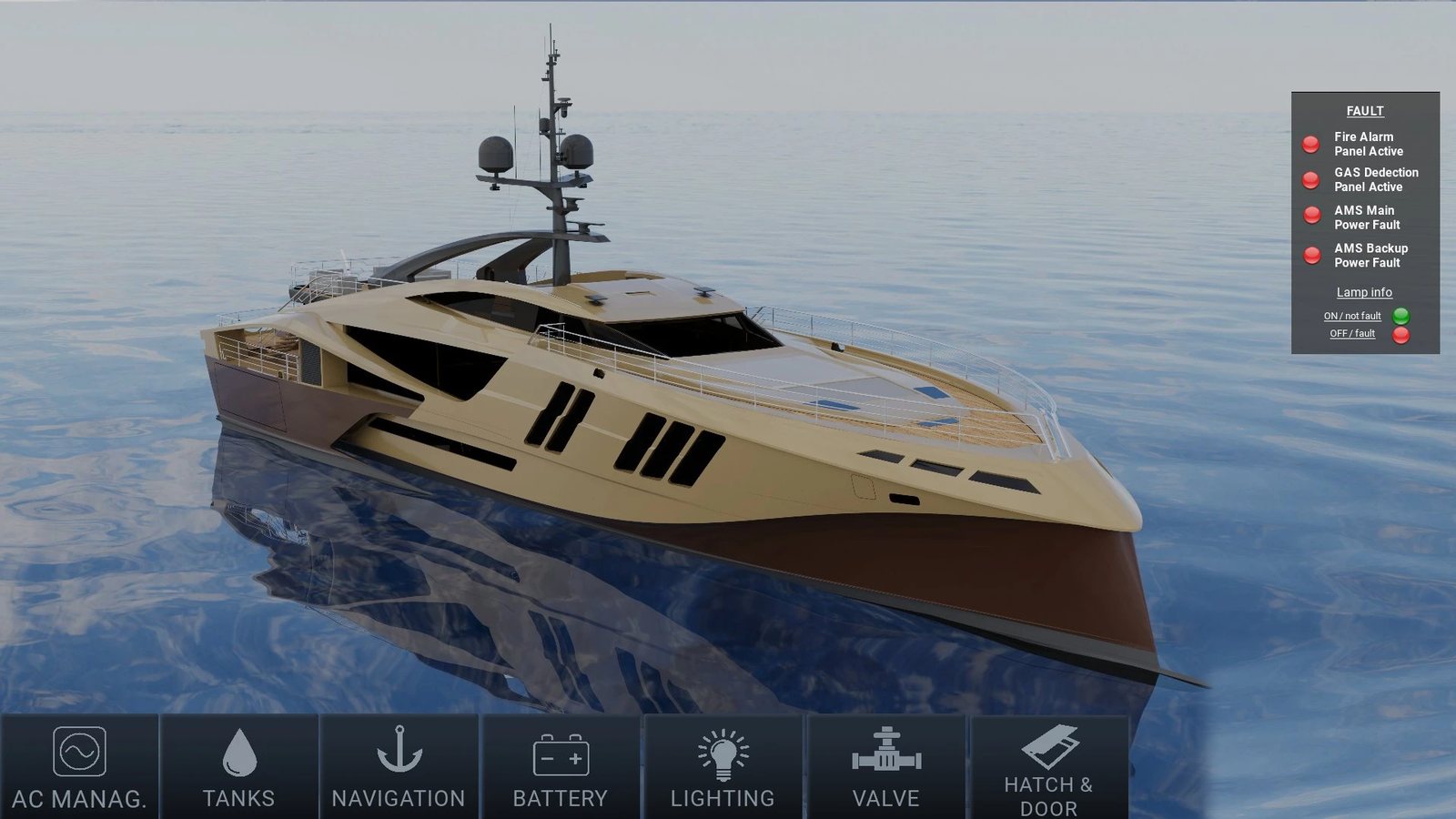
01 · Home screen
Yacht overview with fire and gas detection panels and AMS main and backup power fault status.
- Home screen|Yacht overview with fire and gas detection panels and AMS main and backup power fault status.
- AC power management|Voltage, current, power and frequency of the port, starboard and night generators and shore power; MCCBs and bus-tie breaker.
- Fuel tanks|Layout of all tanks on the yacht plan; remaining volume and capacity of day and main fuel tanks.
- Fresh water tanks|Levels of the port, starboard and centre fresh water tanks.
- Other tanks|Levels of sludge, waste oil and waste water tanks.
- Tank calibration|Sensor mA range, tank capacity, calibration curve with up to 10 points and low/high level alarm settings.
- Navigation lights|Control of port, starboard, masthead, stern, anchor and N.U.C. lights; main and emergency supply status.
- Battery monitoring|Voltages of engine, service, generator, GMDSS, emergency and fire pump batteries; DC insulation fault alarms.
- Lighting|Control of deck, jacuzzi, underwater, toy garage and tender garage floodlights.
- Valves and bilge|Bilge alarm points, valve position feedback, fire and bilge pumps, fuel shut-off valves.
- Doors and hatches|Open/closed feedback for every door and hatch on board.
- Main engine monitoring|RPM, oil pressure, temperature, exhaust, load, fuel consumption and running hours; fuel shut-off and exhaust bypass valve status.
- Alarm history|Time-stamped alarm log: name, state, value and description.
Systems we cover in yacht automation
We bring every system on board into one control platform and make each of them visible and manageable from the screens.
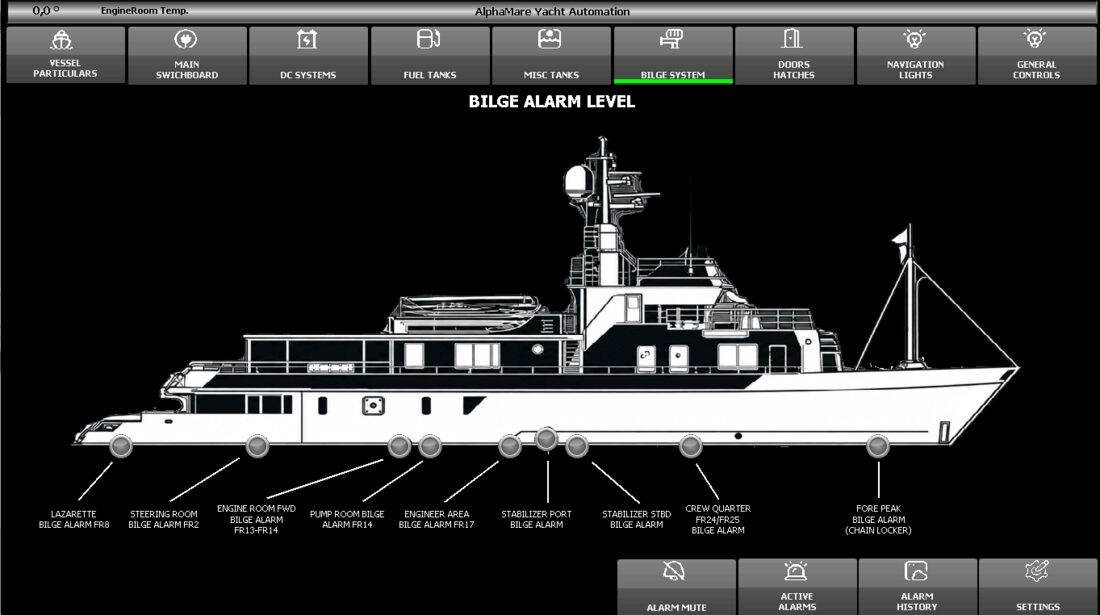
AMS alarm monitoring
Alarm and status information of critical systems on one screen; alarm history, acknowledgement, audible and visual warnings.
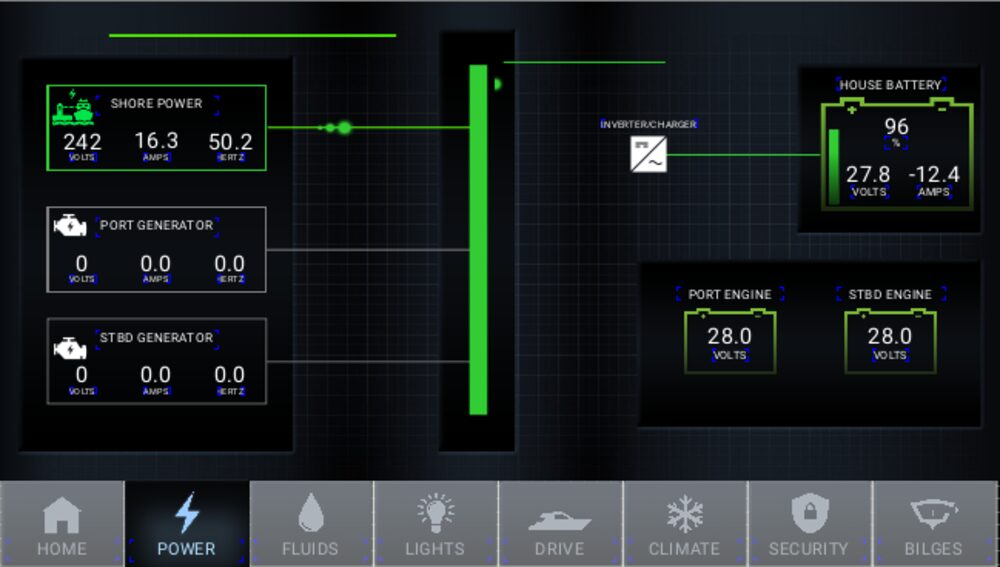
Power management
Monitoring and control of shore power, generators, AC/DC distribution and battery banks.
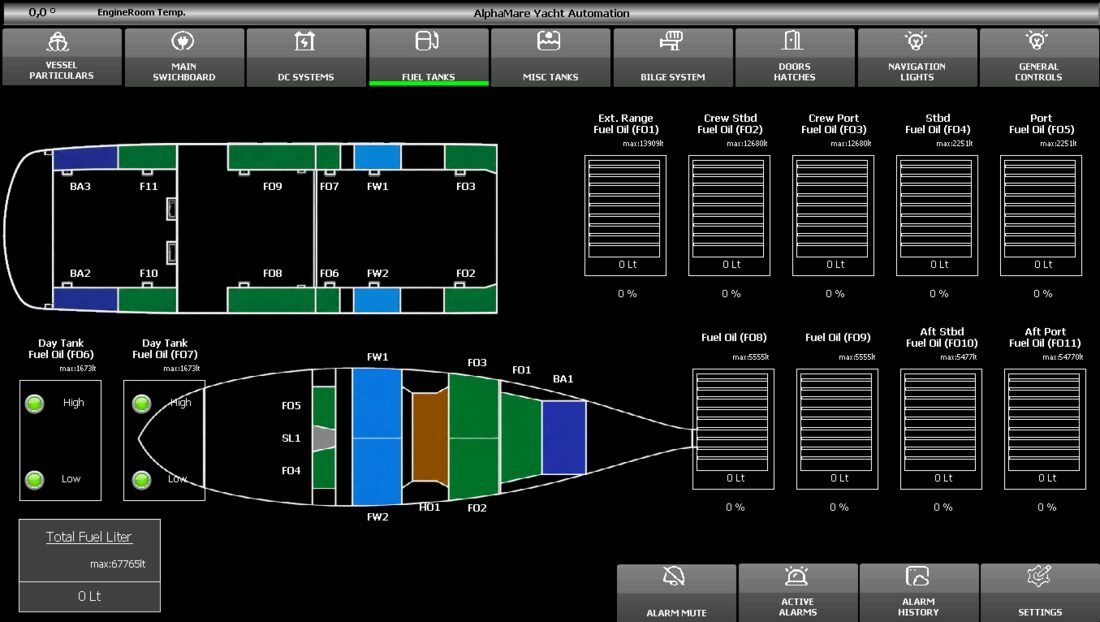
Tanks and bilges
Fuel, fresh, grey and black water tanks; bilge levels, pump control and alarms.
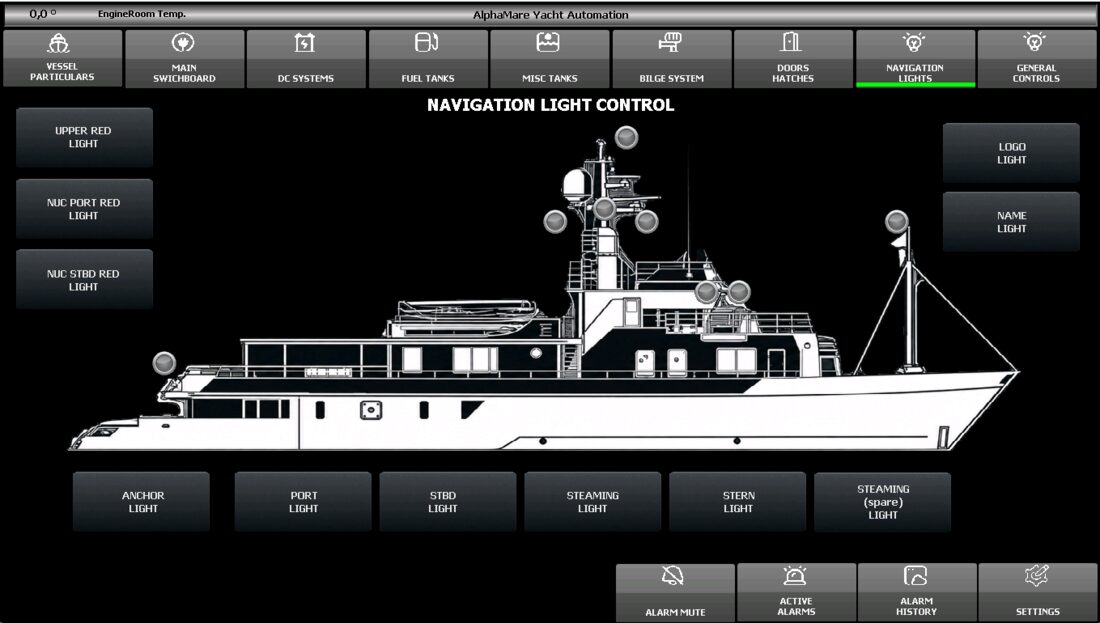
Lighting and navigation lights
Digital control and fault tracking of navigation, anchor, deck and underwater lighting.
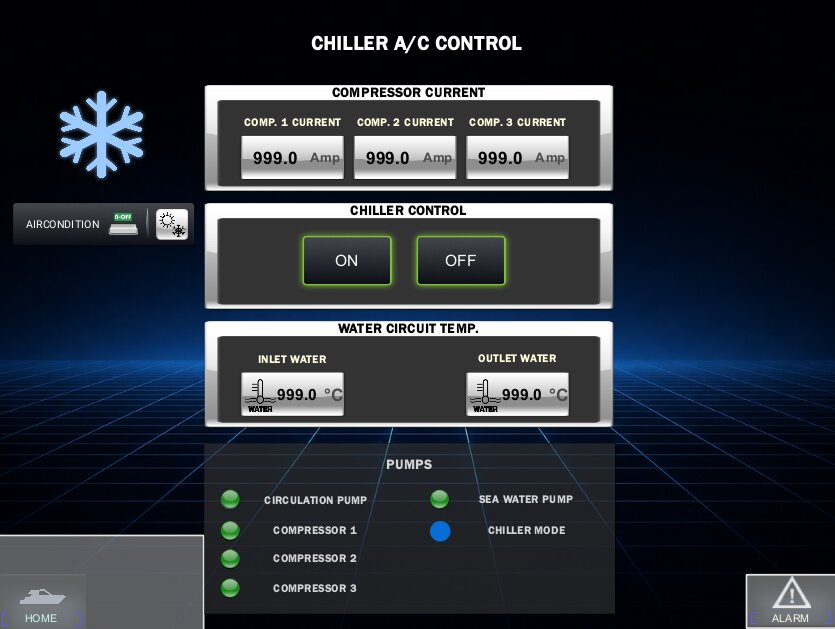
HVAC and fan-coil
Central control and monitoring of Cruisair and Condaria air conditioning.
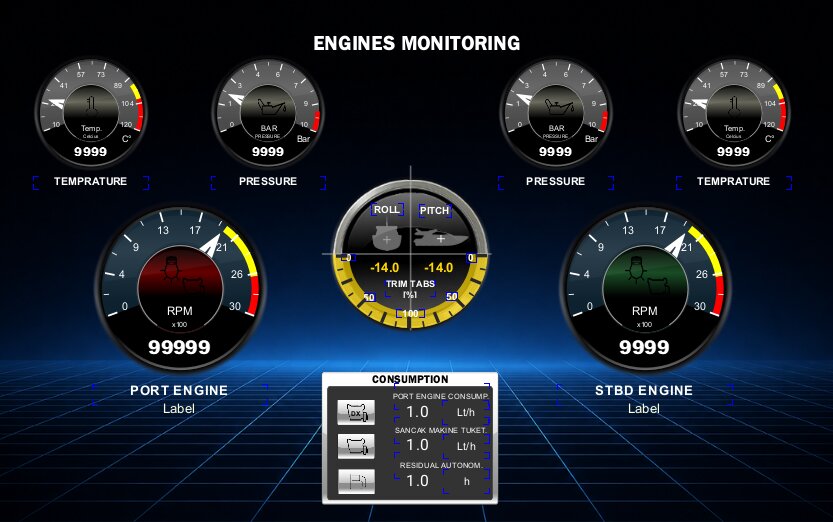
Engine monitoring
RPM, temperature, pressure and alarm data from MTU and other main engines over CAN and J1939.
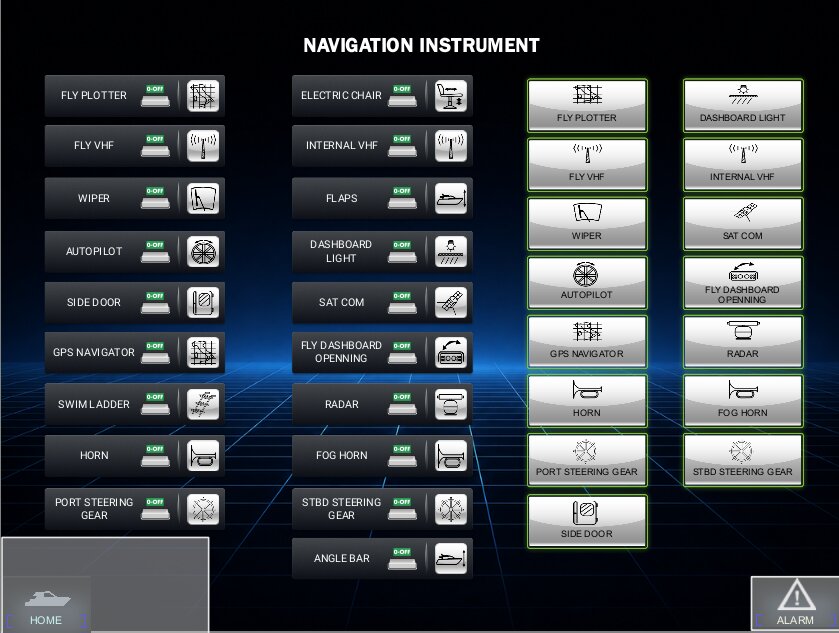
Navigation data
NMEA 0183 and NMEA 2000 data brought into the automation, with custom alarm scenarios.
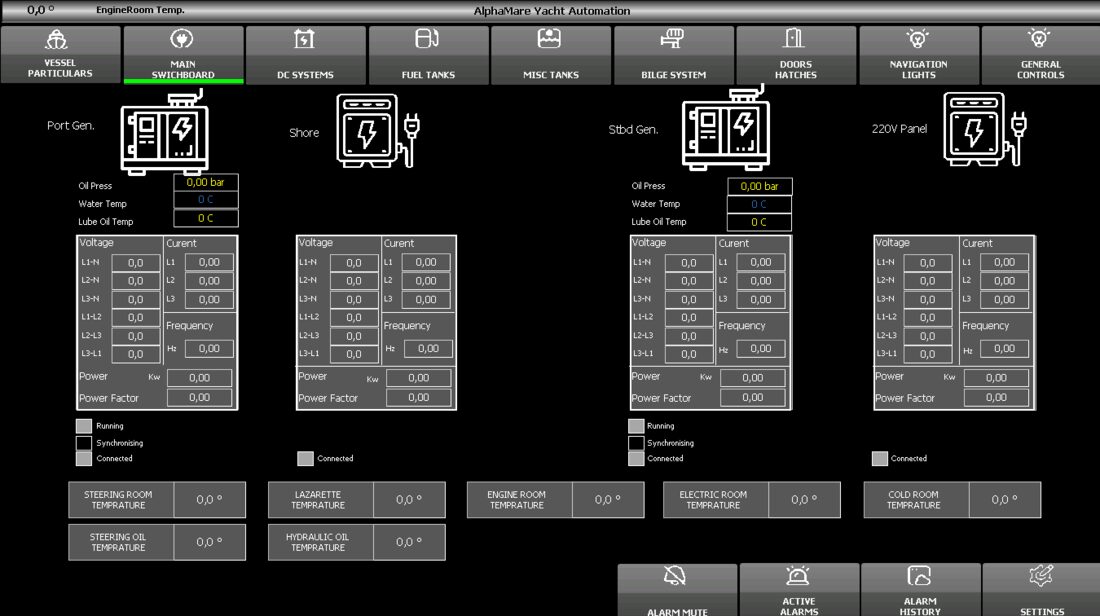
Remote monitoring and service
Authorised remote monitoring, fault diagnosis and software updates.
Our yacht automation screens
Screens from an AMS interface we designed for a motor yacht, from the home page to the alarm history.
01 · Home screen
Yacht overview with fire and gas detection panels and AMS main and backup power fault status.
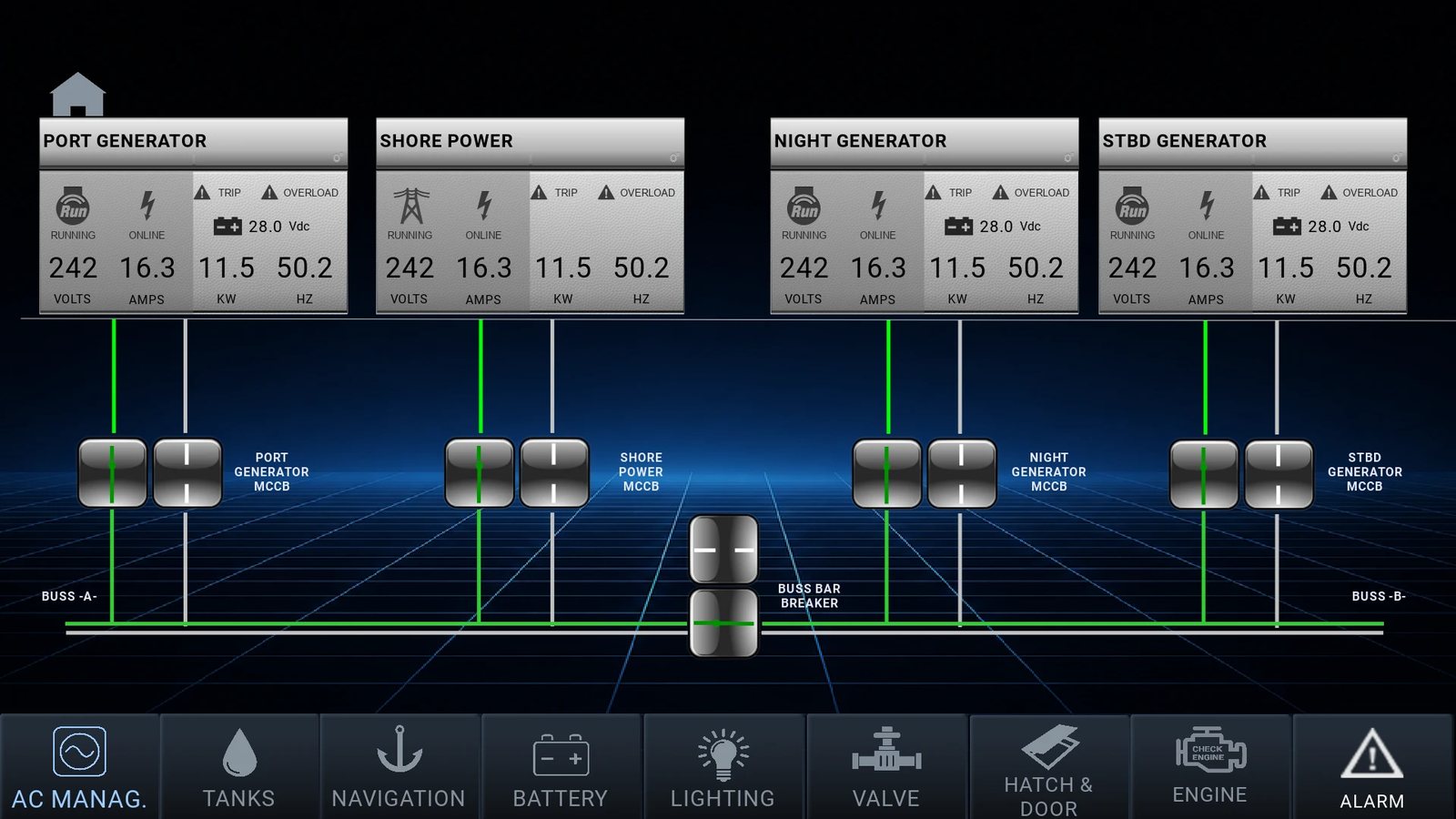
02 · AC power management
Voltage, current, power and frequency of the port, starboard and night generators and shore power; MCCBs and bus-tie breaker.
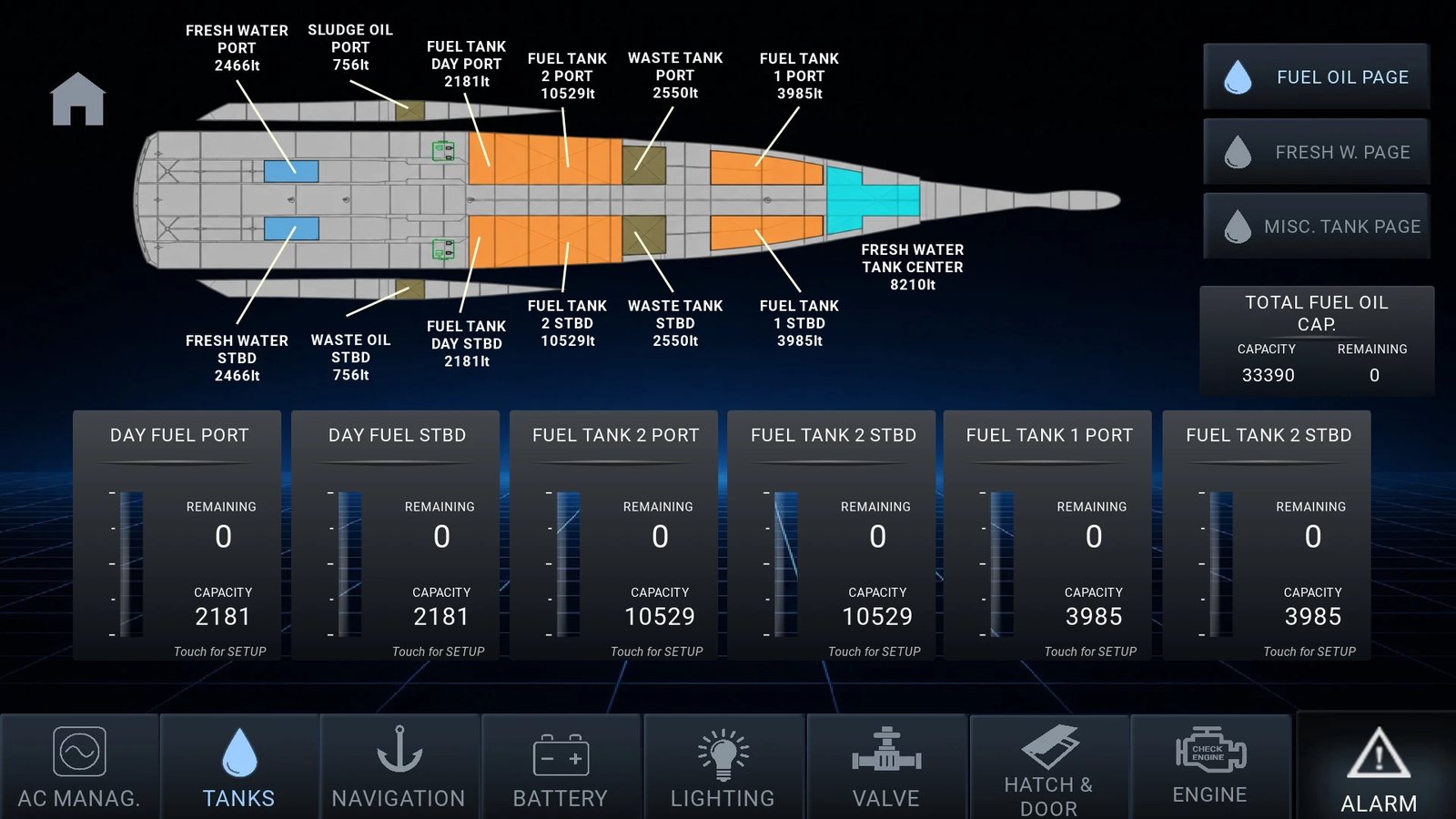
03 · Fuel tanks
Layout of all tanks on the yacht plan; remaining volume and capacity of day and main fuel tanks.
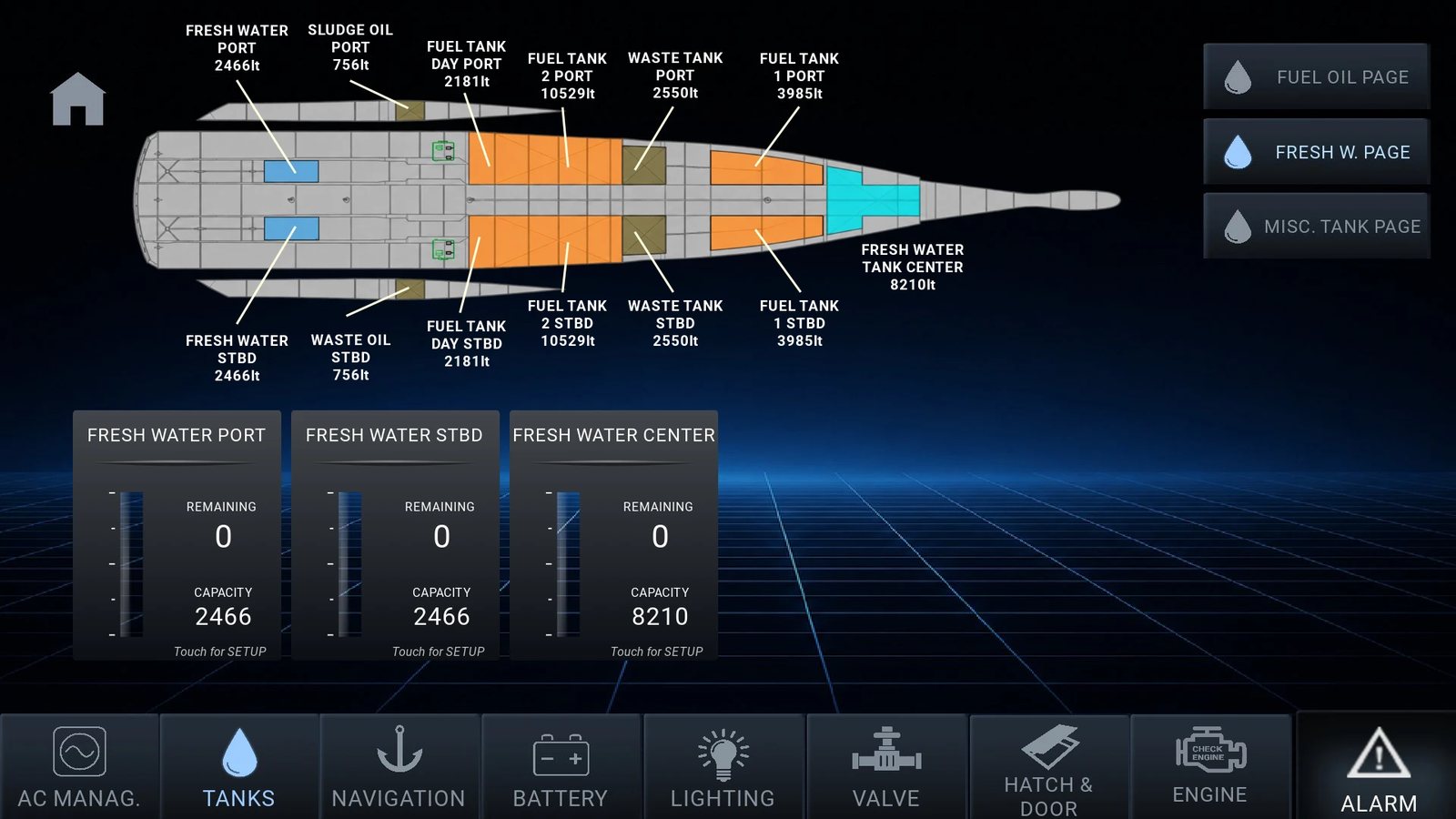
04 · Fresh water tanks
Levels of the port, starboard and centre fresh water tanks.
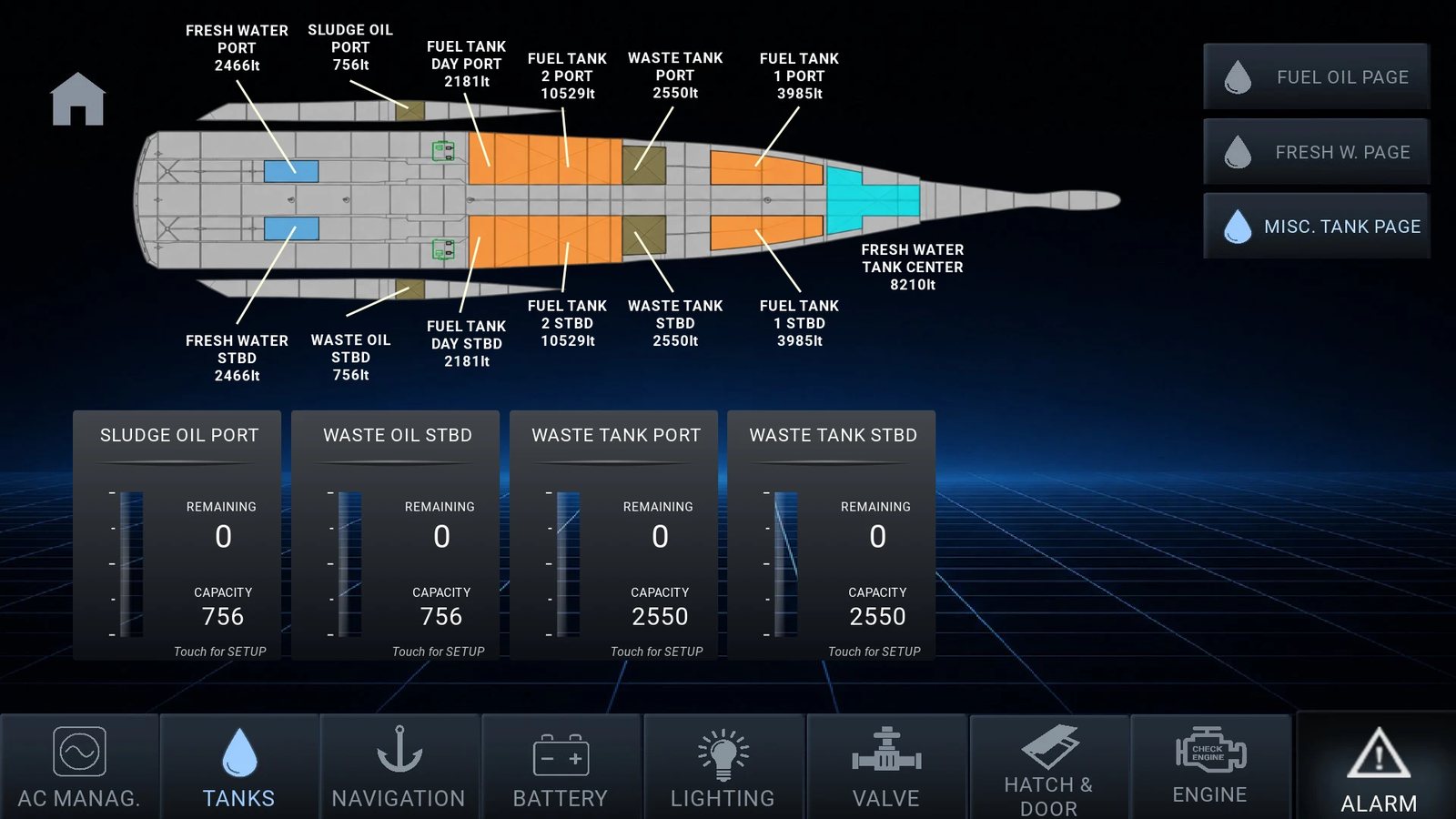
05 · Other tanks
Levels of sludge, waste oil and waste water tanks.
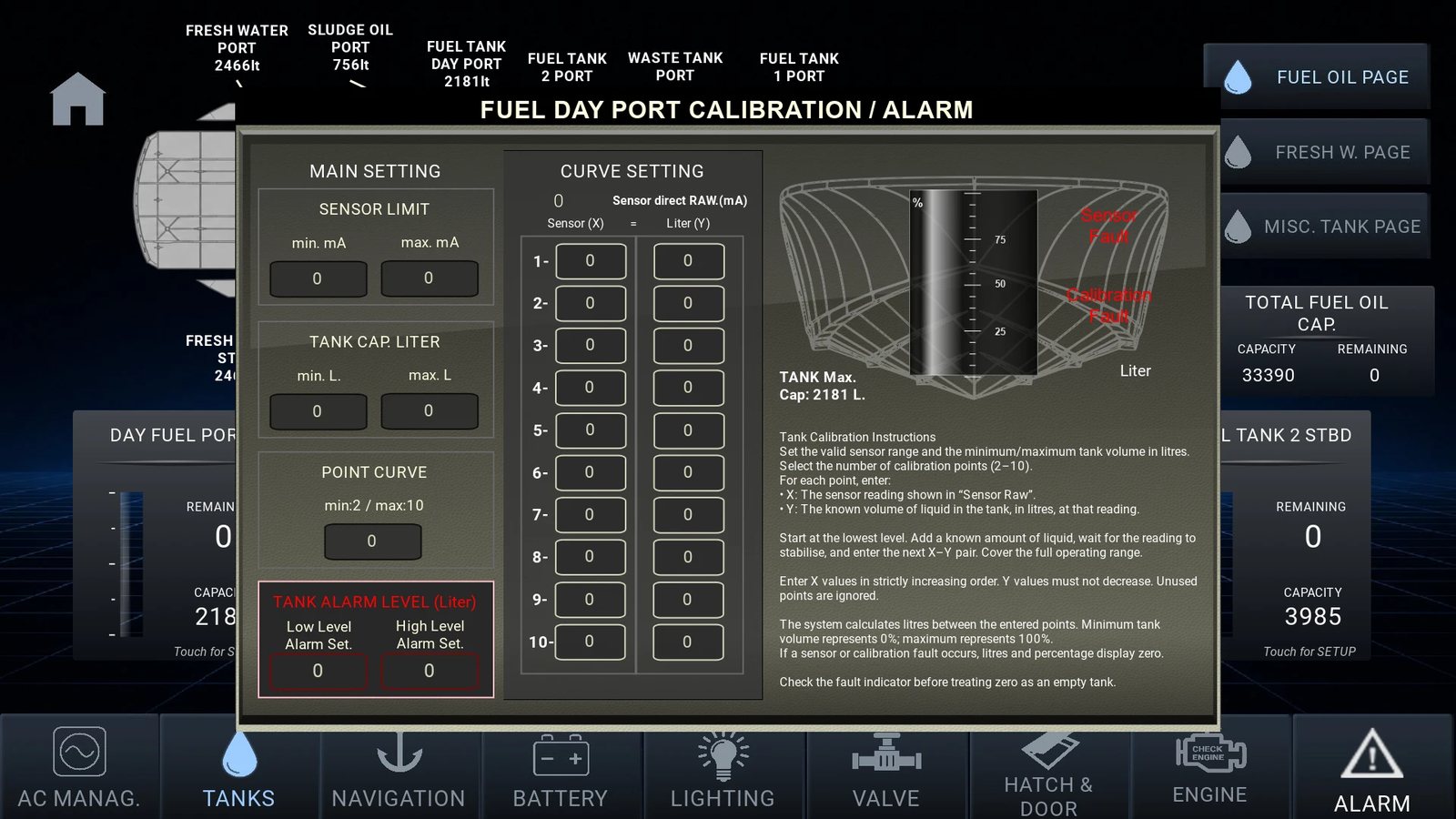
06 · Tank calibration
Sensor mA range, tank capacity, calibration curve with up to 10 points and low/high level alarm settings.
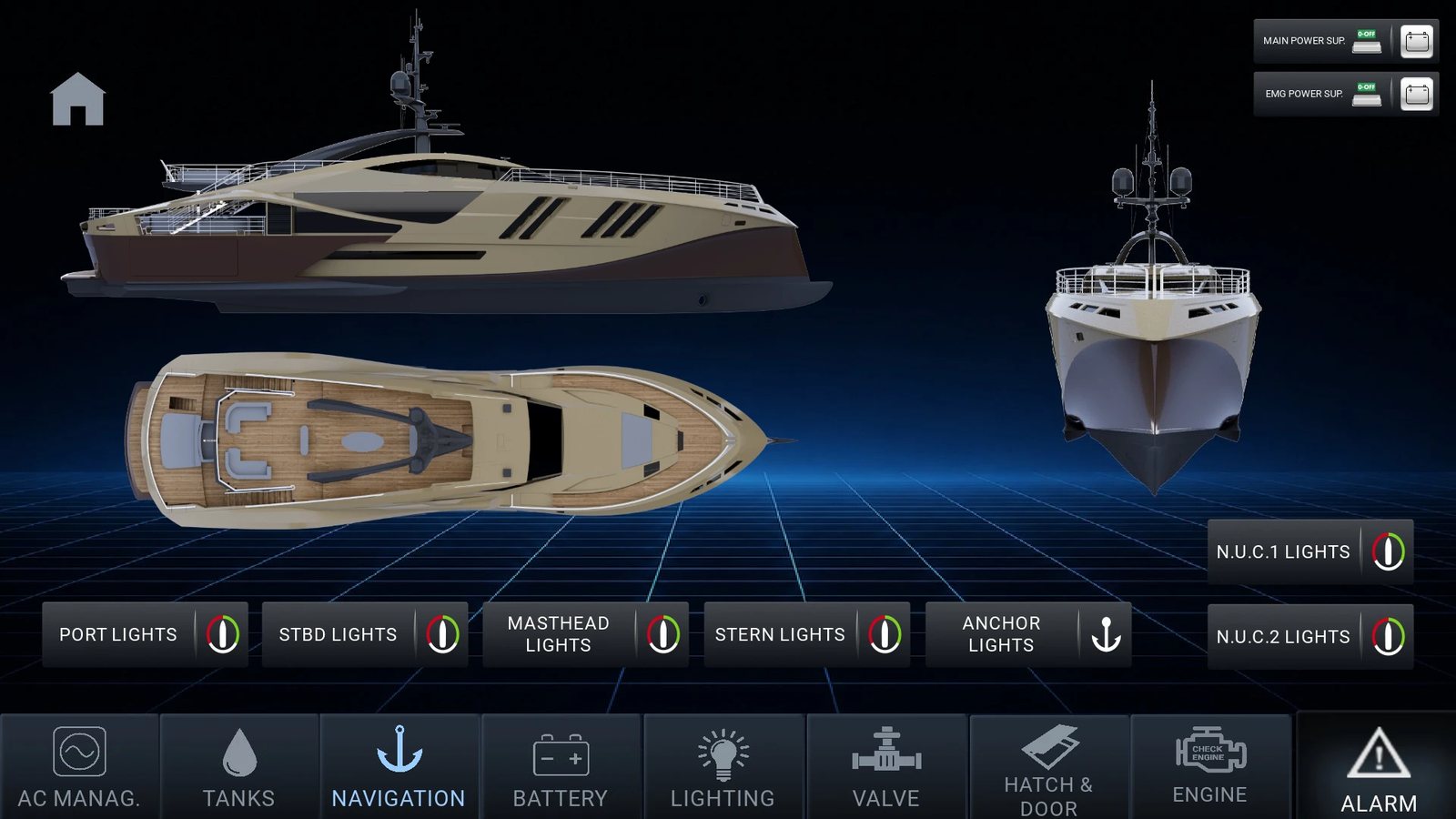
07 · Navigation lights
Control of port, starboard, masthead, stern, anchor and N.U.C. lights; main and emergency supply status.
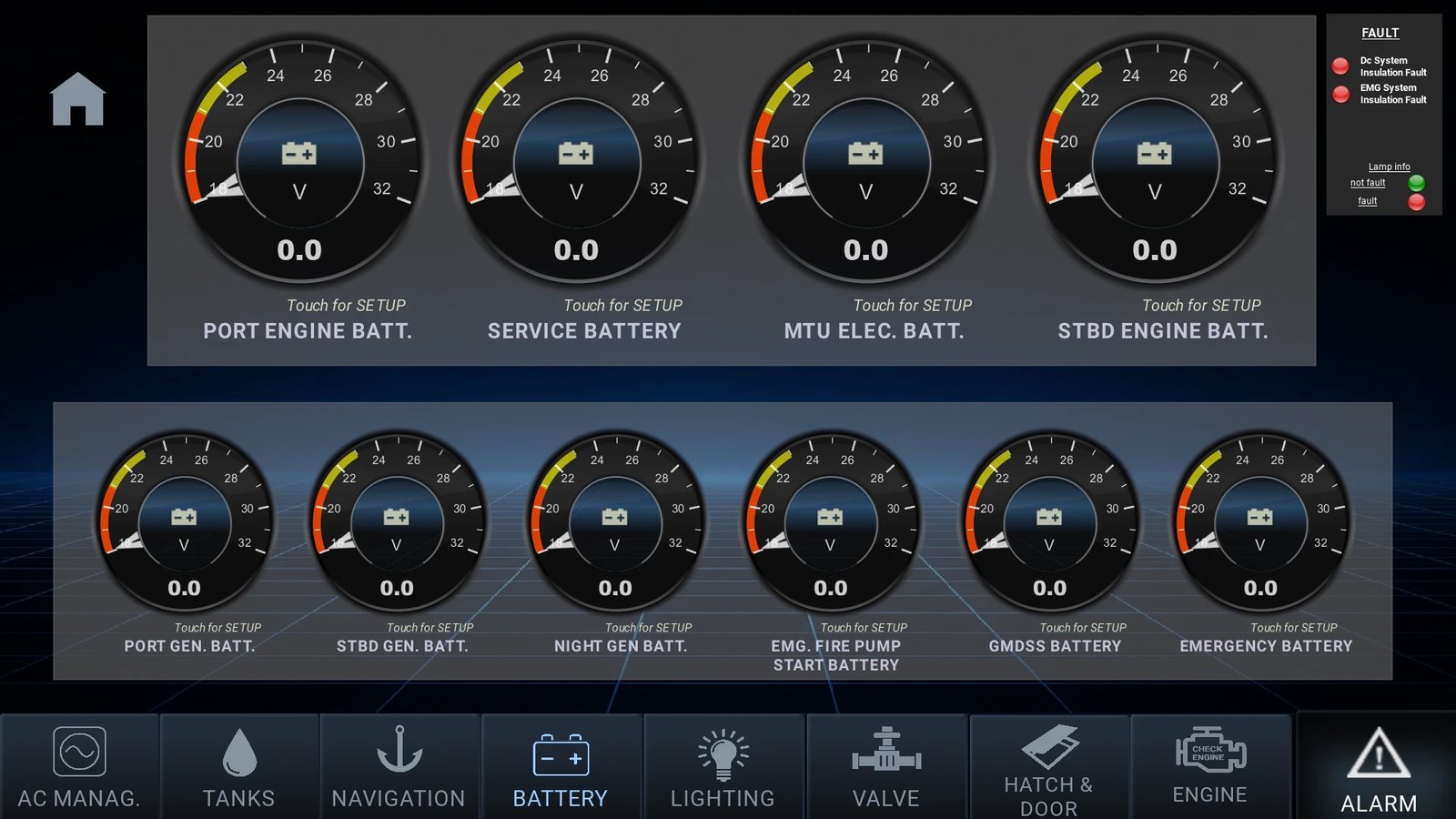
08 · Battery monitoring
Voltages of engine, service, generator, GMDSS, emergency and fire pump batteries; DC insulation fault alarms.
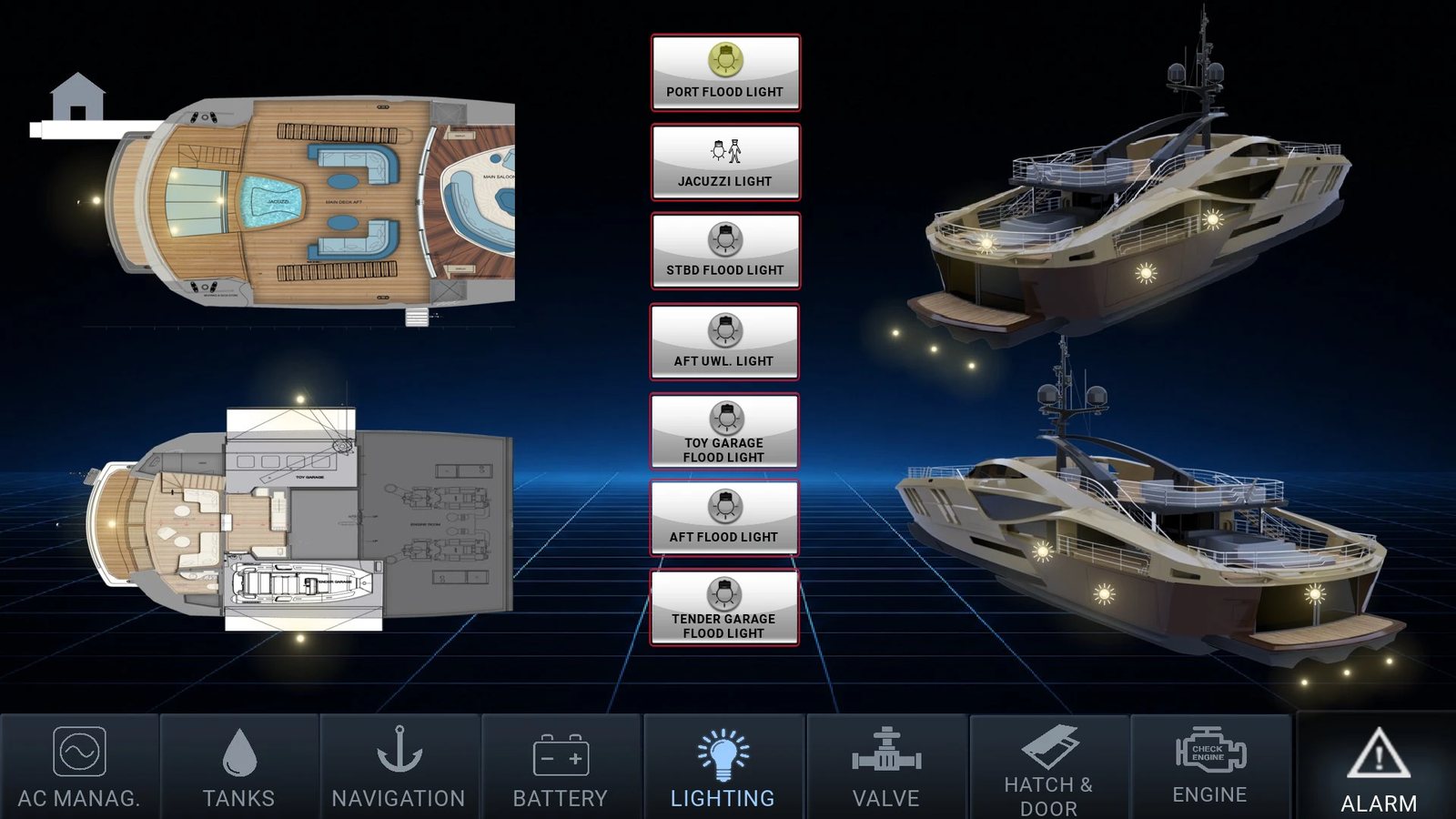
09 · Lighting
Control of deck, jacuzzi, underwater, toy garage and tender garage floodlights.
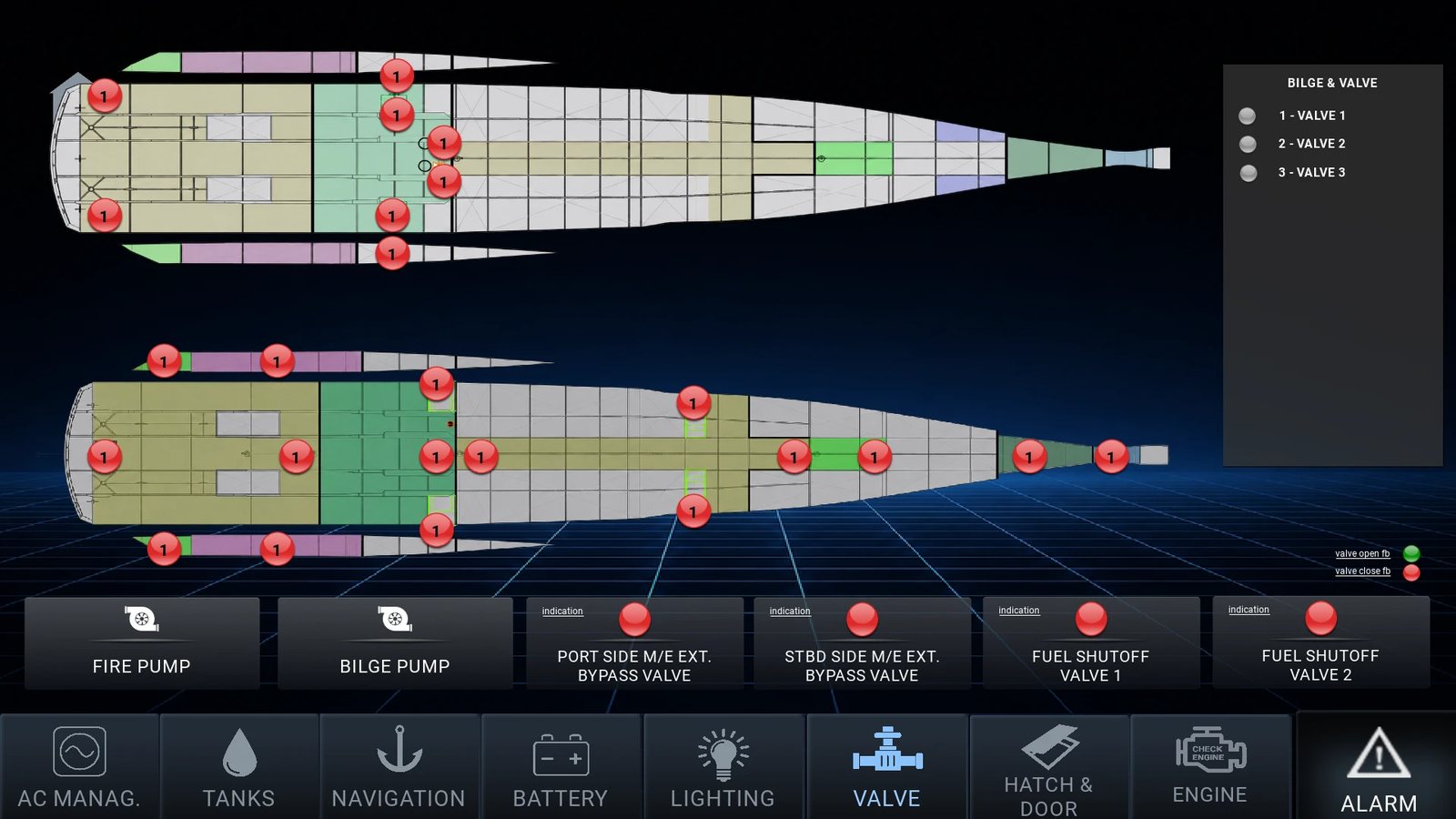
10 · Valves and bilge
Bilge alarm points, valve position feedback, fire and bilge pumps, fuel shut-off valves.
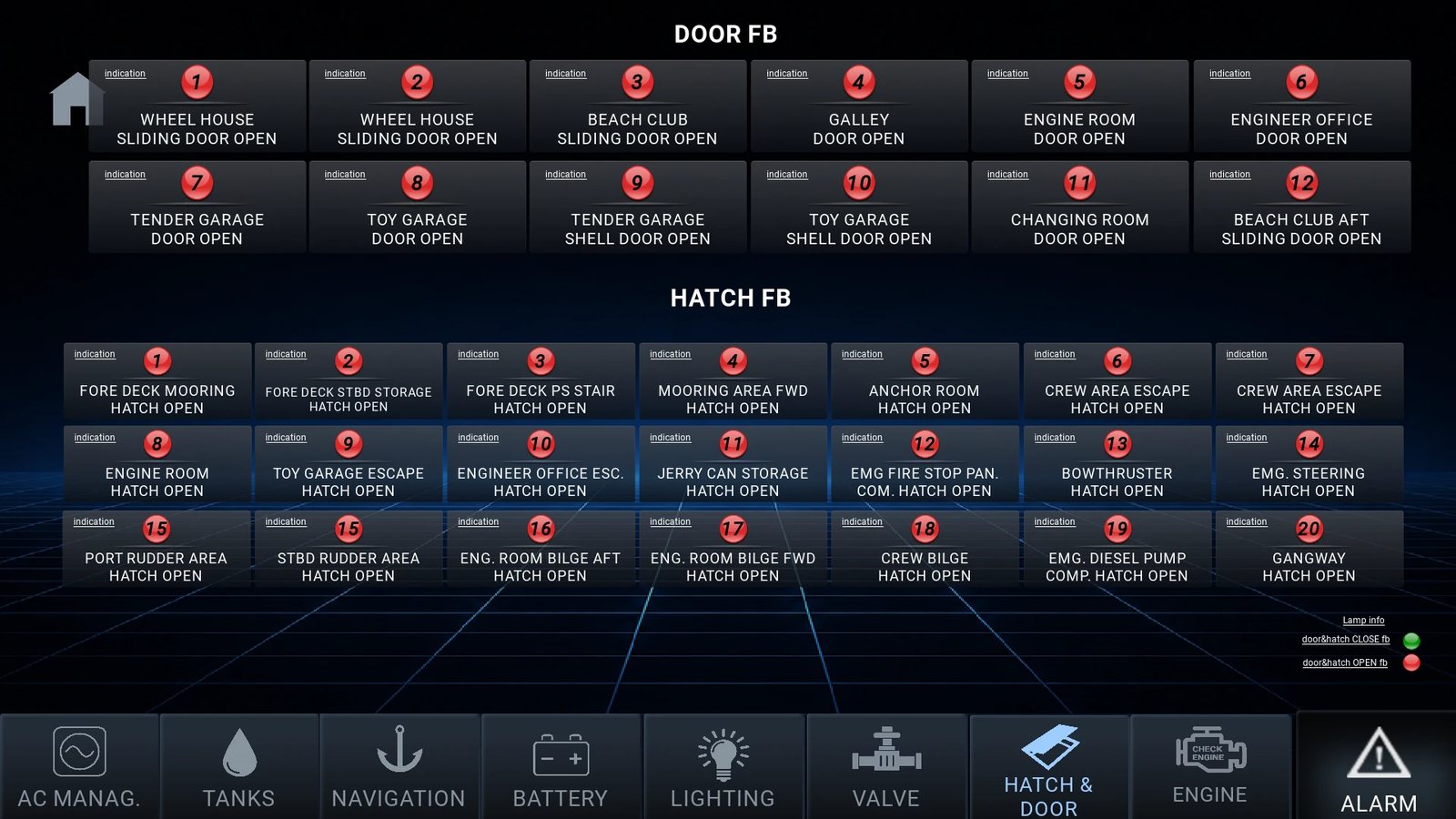
11 · Doors and hatches
Open/closed feedback for every door and hatch on board.
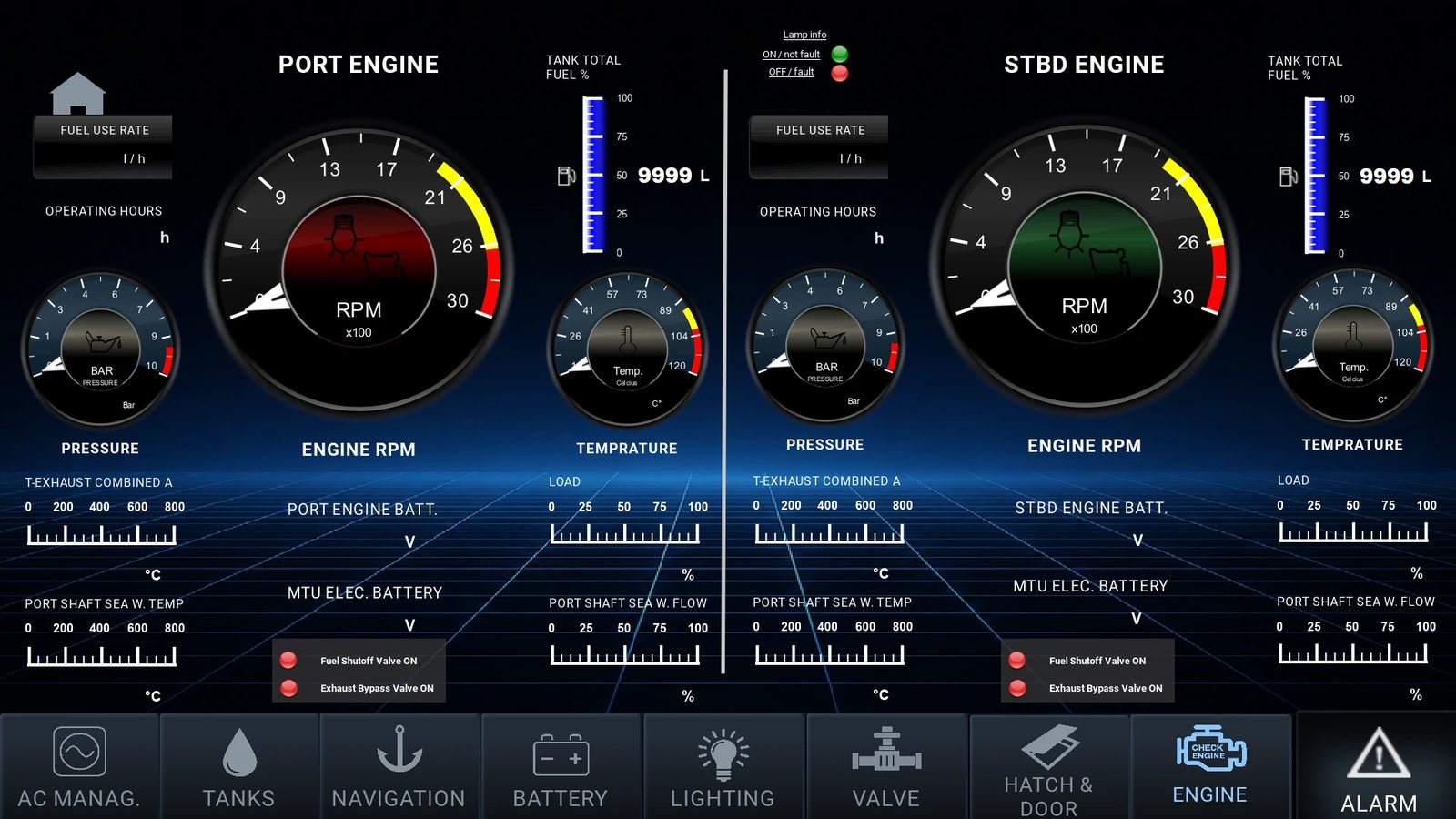
12 · Main engine monitoring
RPM, oil pressure, temperature, exhaust, load, fuel consumption and running hours; fuel shut-off and exhaust bypass valve status.
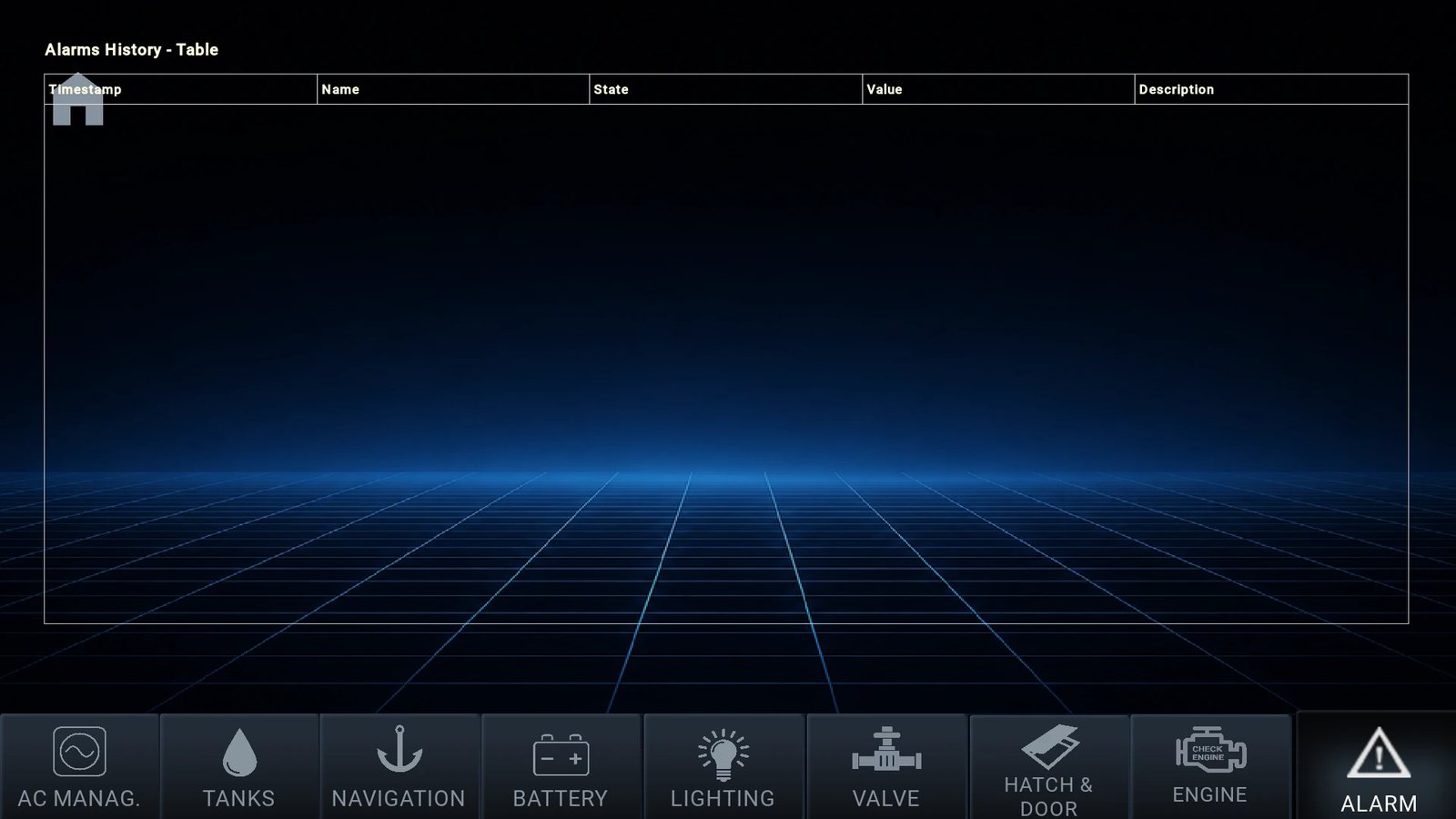
13 · Alarm history
Time-stamped alarm log: name, state, value and description.
The PLC, HMI and SCADA platforms we use
We build each project on proven industrial and marine-certified platforms, chosen for the size of the yacht and its class requirements.
WAGO PLC
Modular WAGO controllers and I/O modules, programmed with CODESYS V2 and CODESYS V3 (SP21). A product family with class type approvals for ships and yachts.
Schneider Electric
Flexible, expandable control built on Schneider Electric PLC and I/O modules where the project calls for it.
Beijer HMI
Beijer touch operator panels with screens designed in iX Developer for each yacht's layout and crew.
EXOR HMI
EXOR operator panels with bridge, engine room and cabin screens and yacht SCADA interfaces built in JMobile.
Yacht SCADA
Multi-station displays, central alarm management, trend and event logging, user rights and remote access.
Communication
Modbus RTU and Modbus TCP, CANopen, SAE J1939, NMEA 2000 and Ethernet, so different brands work in one system.
Marine-certified systems and class approval
We use only marine-certified, type-approved PLCs, HMIs and electrical components in our systems.
The yacht automation systems we build are designed to obtain approval from classification societies such as RINA, ABS and DNV. Electrical drawings, I/O lists, test procedures and handover documents are prepared for the class process, and we work alongside the shipyard and the surveyor during approval.
How a yacht automation project runs
- 1
Survey and requirements
We inspect the existing systems, sensors and wiring on board and draw up the requirements.
- 2
Engineering
We prepare electrical drawings, the I/O list, the communication architecture and the screen designs.
- 3
Workshop build and FAT
We build the panels in our workshop and put them through a factory acceptance test with the software.
- 4
Installation and commissioning
We install on board and commission the system with a site acceptance test (SAT).
- 5
Handover and service
We complete documentation and crew training, then stay with you through maintenance and remote support.
Examples from our projects
A selection of completed yacht automation projects.
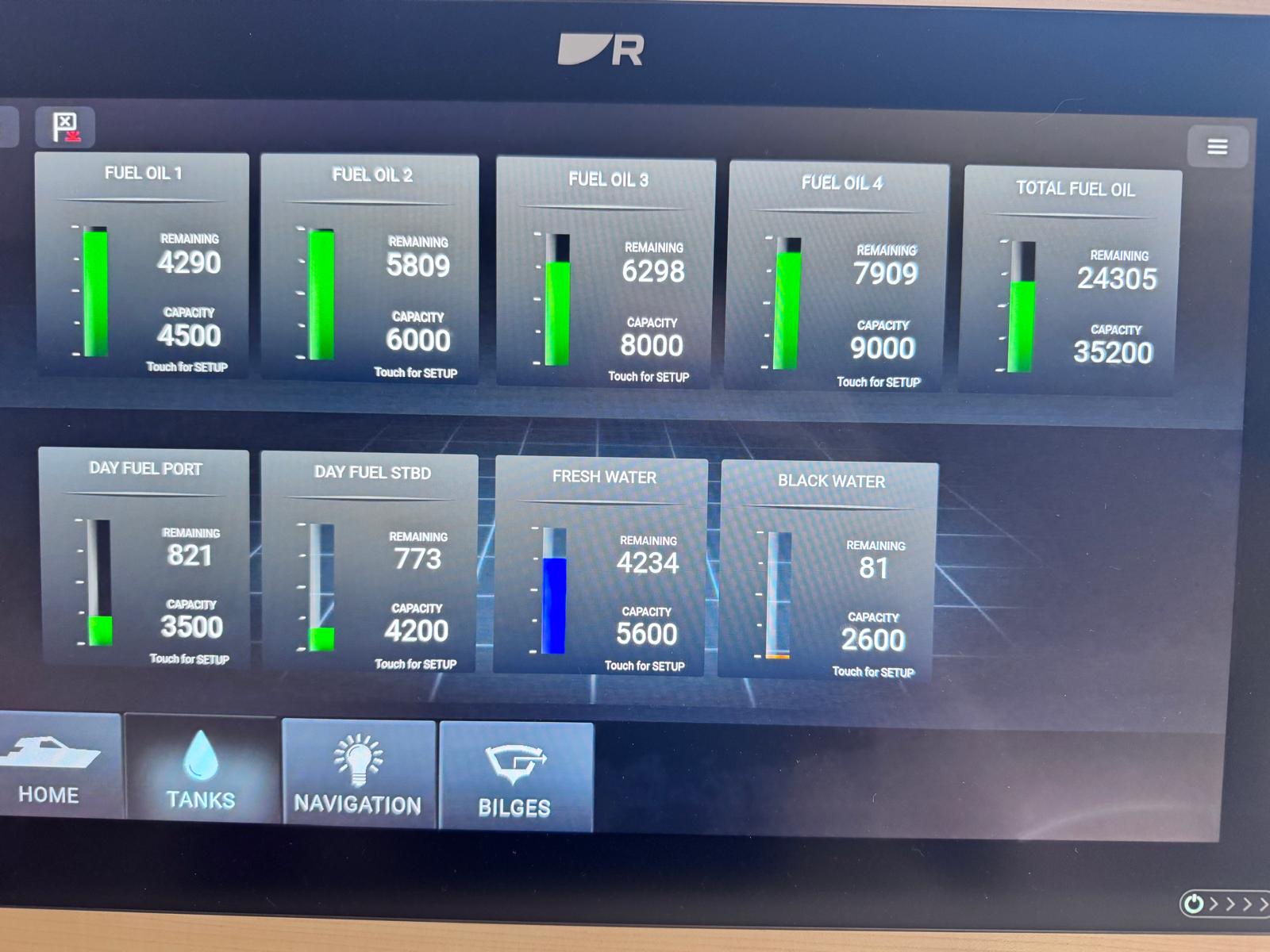
45m Motor Yacht — YachtSense Integration
An end-to-end automation installation integrating batteries, tanks, bilges and navigation lights into a central control platform.
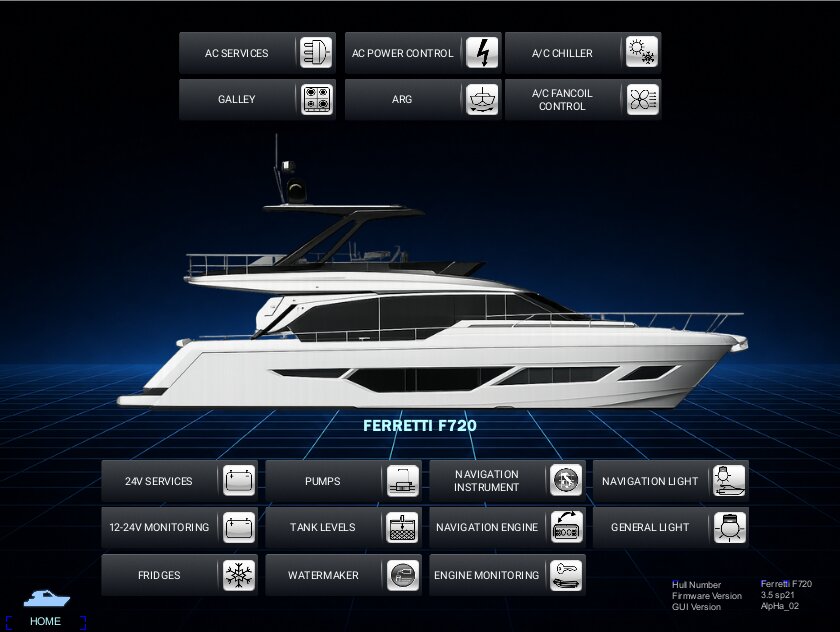
Ferretti F720 — Automation System Retrofit
Removing the old automation platform and replacing it with new-generation certified modules and custom-developed software.
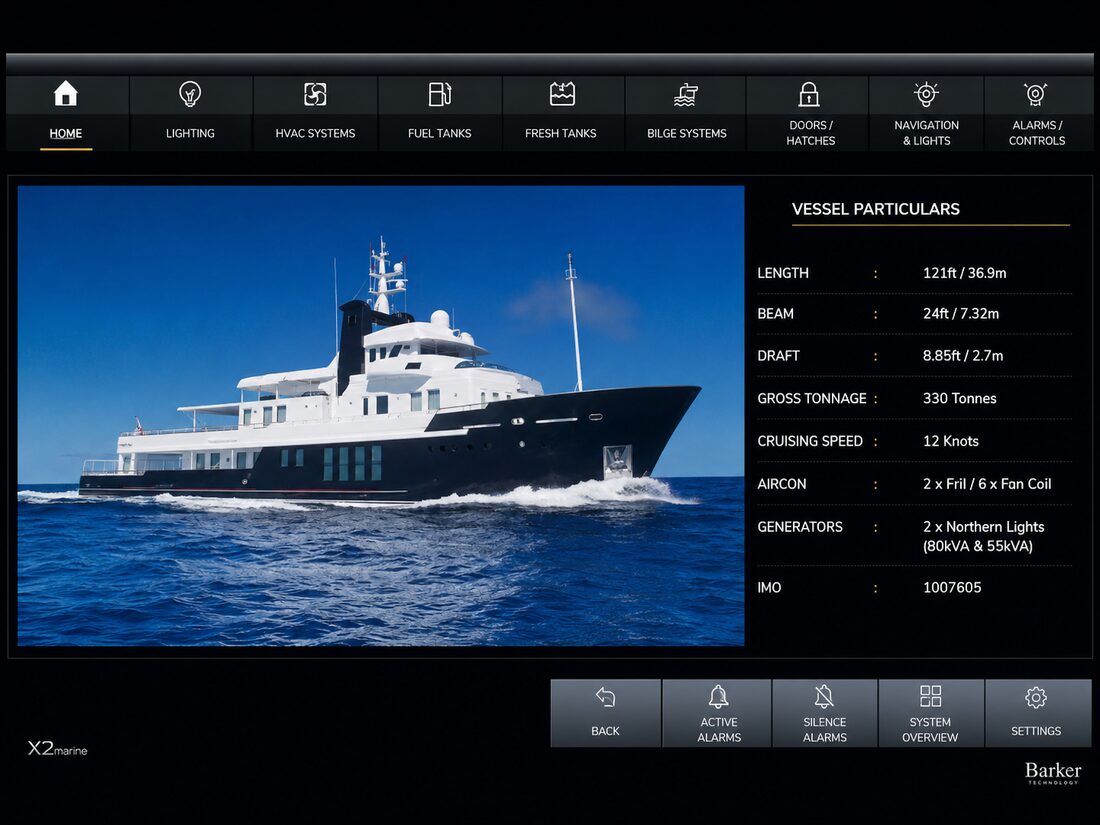
39m M/Y Jasmin, Built by RMK Shipyard — Automation System Refit
Refitting an automation system that brings fuel, battery, bilge, navigation light and general equipment monitoring together in a single interface.
Yacht automation FAQ
The most common questions about yacht automation systems, class approval and the platforms we use.
What is a yacht automation system?
A yacht automation system lets the electrical, tank, bilge, lighting, HVAC, engine and navigation systems on board be monitored over a PLC network and controlled from touch screens. Alarm monitoring (AMS) sits at its core.
Do you provide yacht automation service in Bodrum?
Yes. Our workshop is in Kumbahçe, Bodrum. We respond quickly to marinas in and around Bodrum and deliver projects and service to yachts across Turkey.
Which PLC and HMI brands do you work with?
We program WAGO PLCs with CODESYS V2 and CODESYS V3 (SP21) and use Schneider Electric PLC modules together with Beijer and EXOR operator panels. Screens are built in iX Developer and JMobile. We also integrate with Naviop, Simrad and Raymarine systems.
Can your systems obtain class approval?
Yes. Built with marine-certified components, our yacht automation systems are engineered to obtain approval from classification societies such as RINA, ABS and DNV, and we prepare the required documentation.
Can you renew an existing automation system without replacing everything?
In most cases, yes. We keep the usable sensors, wiring and panels and move the controller and screens to a new-generation system; the Ferretti F720 and M/Y Jasmin projects are examples.